Skip to content
🎟 Prenota il Biglietto
Home › History
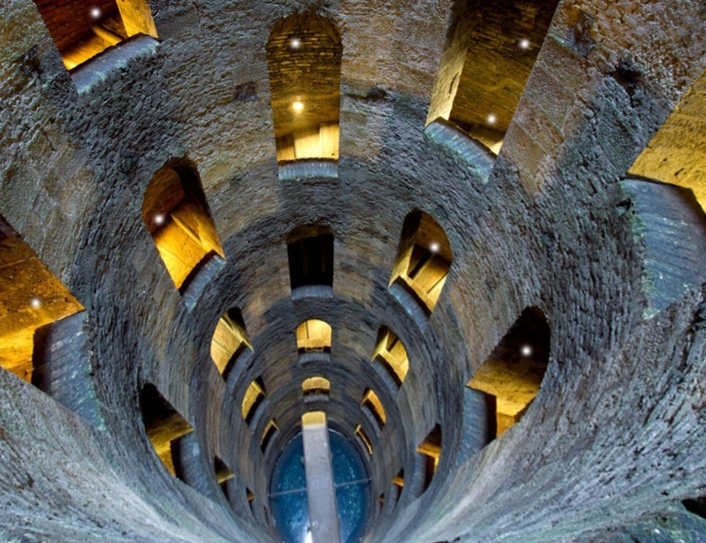
Scala elicoidale del Pozzo di San Patrizio vista dal basso — Orvieto
1527 – 1537 · Orvieto · Umbria

The History of St Patrick's
Well

From the Sack of Rome to the rock of Orvieto. How a fugitive pope commissioned one of the most extraordinary feats of engineering of the Renaissance.
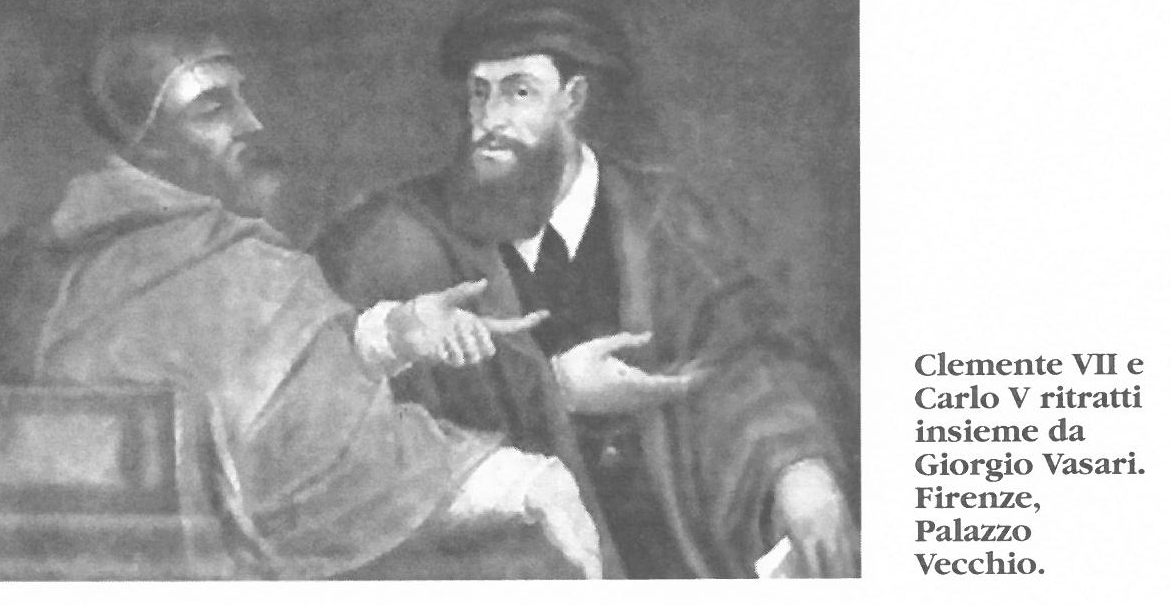
Papa Clemente VII — committente del Pozzo di San Patrizio Pope Clement VII (Giulio de' Medici) · 1523–1534
The Historical Context

The Sack of Rome
and the flight to Orvieto

On 6 May 1527 the troops of Charles V of Habsburg stormed Rome. The Sack that followed was one of the most traumatic events in European history: churches desecrated, palaces plundered, thousands dead. Pope Clement VII — born Giulio de' Medici — managed to escape by night from Castel Sant'Angelo disguised as a servant and reached Orvieto, perched on its tufa crag.

"The pope lodges in the crumbling palace of the Bishop of Orvieto, lacking the comforts and the decorum befitting the eminence of its guest."

Account of the English ambassadors of Henry VIII · 1527

Orvieto is a safe but isolated city, built on a crag that is hard to take. Its Achilles' heel is water: during a prolonged siege the city would be left without it. Clement VII decided to solve the problem once and for all: he commissioned an extraordinary well to guarantee the water supply even under siege. The project was entrusted to the finest architect available: Antonio da Sangallo the Younger.

The Designer

Antonio da Sangallo the Younger

The task of building the well of the fortress was entrusted to Antonio da Sangallo the Younger — born in Florence in 1484, died in Rome in 1546 — the greatest Renaissance architect to have had a strictly professional training.

Trained alongside his uncle Giuliano da Sangallo and Bramante, Sangallo had already proved his extraordinary technical skill building strongholds and fortresses for the Farnese family. He was already working in Orvieto when Clement VII summoned him: he had designed the Altar of the Magi in the Cathedral and rebuilt the Adunata bridge over the Paglia.

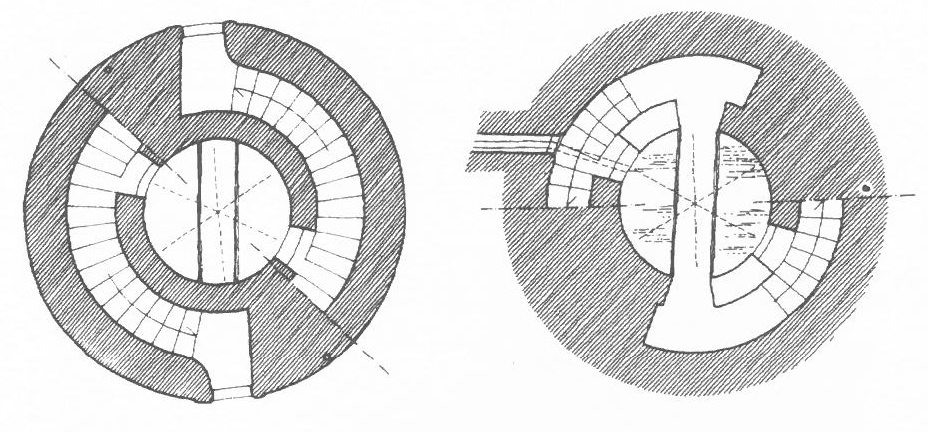
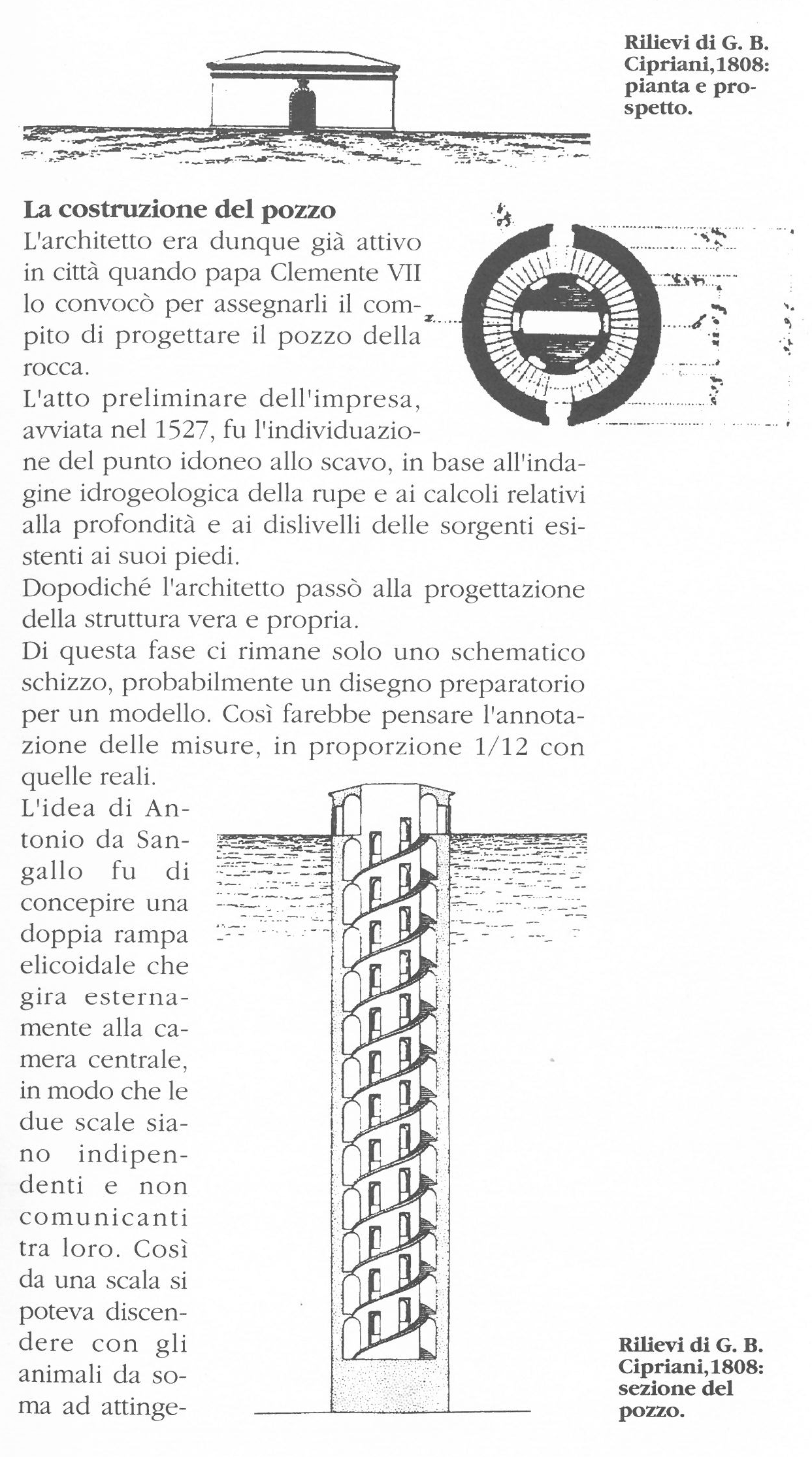
His stroke of genius was to conceive a double helical ramp that wound around the outside of the central shaft, so that the two staircases were independent and did not connect. One staircase let pack animals descend to draw water at the bottom, cross the little wooden bridge and climb back up the other without ever obstructing the oncoming traffic.
Born Florence, 1484
Died Rome, 1546
Commission 1527 — commissioned by Clement VII
Time in Orvieto 1529 – 1533
Schema architettonico del Pozzo di San Patrizio — pianta e sezione di Antonio da Sangallo Architectural drawing of the Well · G.B. Cipriani, 1808
1527 – 1537

The Construction

53 metres Depth
12,2 metres Outer diameter
4,6 metres Inner diameter
248 steps Per staircase
72 windows Internal
10 years Of construction

Work began in 1527 with the identification of the right spot to dig, based on a hydrogeological survey of the crag and calculations of the depth of the existing springs. Sangallo settled in Orvieto from 1529, leaving only in 1533 to travel to Ancona.

Halfway down, unexpected difficulties arose: below the rock bed began a looser layer of clay and pozzolana. From that point on the two spiral staircases and the windows had to be built in brick, working from the top downward. In 1534 Clement VII died — the well was not yet finished. It was his successor, Paul III Farnese who brought it to completion in 1537.

To celebrate the achievement, Benvenuto Cellini struck a commemorative medal: on one side the profile of Clement VII, on the other Moses drawing water from the rock — with the inscription VT BIBAT POPULUS, "that the people may drink".
Vista verticale del Pozzo di San Patrizio — scala elicoidale interna Interior view of the helical staircase · Ludovico Caracciolo, 1832
The Meaning

Why "St Patrick's"?

The oldest documents simply call this work "the well of the fortress". The name "St Patrick's" only came into use towards the end of the eighteenth century, later becoming the customary official name. The reason is simple: its extraordinary depth evoked in the popular imagination the Purgatory of St Patrick, the legendary Irish cavern linked to the afterlife.

"Quod natura munimento inviderat,
industria adiecit"

Translation "What nature had denied as a defence, ingenuity supplied" · Inscription carved at the entrance to the Well

This Latin epigraph, carved on the brick curtain outside the well, captures the whole spirit of the undertaking: not a mere well, but a response of human ingenuity to nature. Orvieto, built on a crag, had no accessible springs — and yet people found them anyway, descending fifty-three metres into the belly of the rock.

The Legend of St Patrick

At the time another St Patrick's Well was very famous, that of Station Island on Lough Derg in Ireland. According to medieval legend, in that cavern St Patrick had a vision in which Christ himself showed him the way to Purgatory. Whoever stayed there a day and a night would obtain forgiveness of their sins. The depth of the Orvieto well readily evoked this link with the world beyond — and so the name stuck.

Images

Photo Gallery

Ingresso del Pozzo di San Patrizio, Orvieto

The entrance to the Well, Piazza Cahen · Orvieto

Scala elicoidale del Pozzo di San Patrizio

The helical staircase seen from below

Schema architettonico del Pozzo di San Patrizio

Plan and section · G.B. Cipriani, 1808

Vista interna del Pozzo di San Patrizio

The internal windows that light the staircases

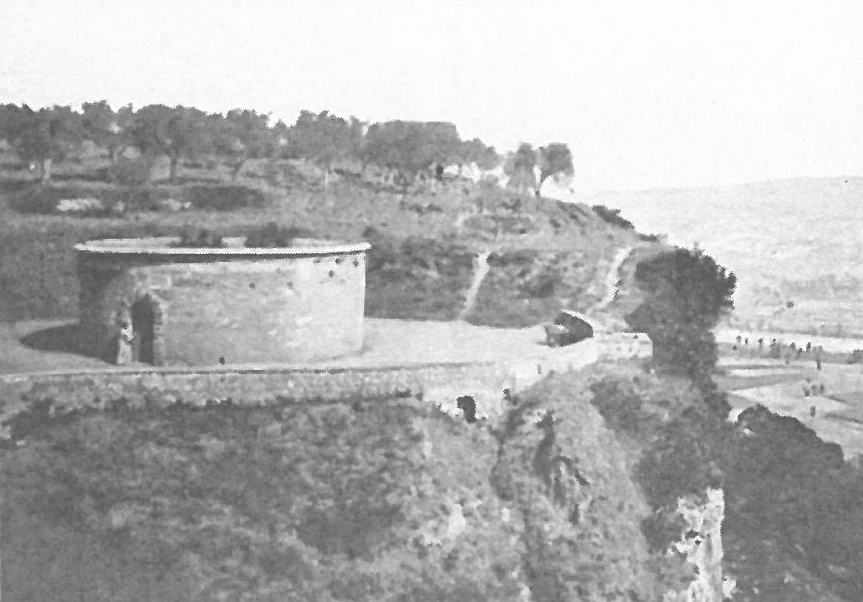
Fotografia storica del Pozzo di San Patrizio

Historic period photograph · early 1900s

Timeline

The Key Events

6 May 1527

The Sack of Rome

The troops of Charles V of Habsburg sack Rome. Pope Clement VII flees Castel Sant'Angelo disguised as a servant and takes refuge in Orvieto.

December 1527

Work Begins

Clement VII commissions the well from Antonio da Sangallo the Younger. The search begins for the right spot to dig on the rock of Orvieto.

June 1528

The Pope Leaves Orvieto

Clement VII returns to Rome after more than six months of exile in Orvieto. Work on the well continues under his supervision from afar.

1529 – 1533

Sangallo in Orvieto

Sangallo settles in Orvieto to direct the works. He tackles the difficulties of the clay and pozzolana layer halfway down, adopting the technique of brick underpinning.

1532

Discovery of the Etruscan Tombs

During the dig, several Etruscan tombs with grave goods are found. The discovery does not stop the works.

September 1534

Death of Clement VII

The patron pope dies without seeing the well finished. He is succeeded by Paul III Farnese, who decides to complete the work.

September 1536

Simone Mosca and the Completion

Paul III visits Orvieto and assigns to the Tuscan Simone Mosca the works of completion and final decoration of the well, including the stonework for the entrance doors.

May 1537

The Well is Completed

After ten years of work, St Patrick's Well is completed. With its 53 metres of depth, 248 steps per staircase and 72 internal windows, it immediately becomes one of the marvels of the Renaissance.

Today

The Second Marvel of Orvieto

Already described in late-eighteenth-century guidebooks as "the second marvel of Orvieto after the Cathedral", the well is today one of the most visited attractions in Umbria and a symbol of Italian Renaissance ingenuity.

Cookie Policy Manage consent